The Fermented Coconut Loaves of Tuvalu
No Room for Wheat Fields
The geographic reality of Tuvalu. When your country is a sandbar, you don’t bake with grain—you bake with sap.
The Airstrip is the Town Square
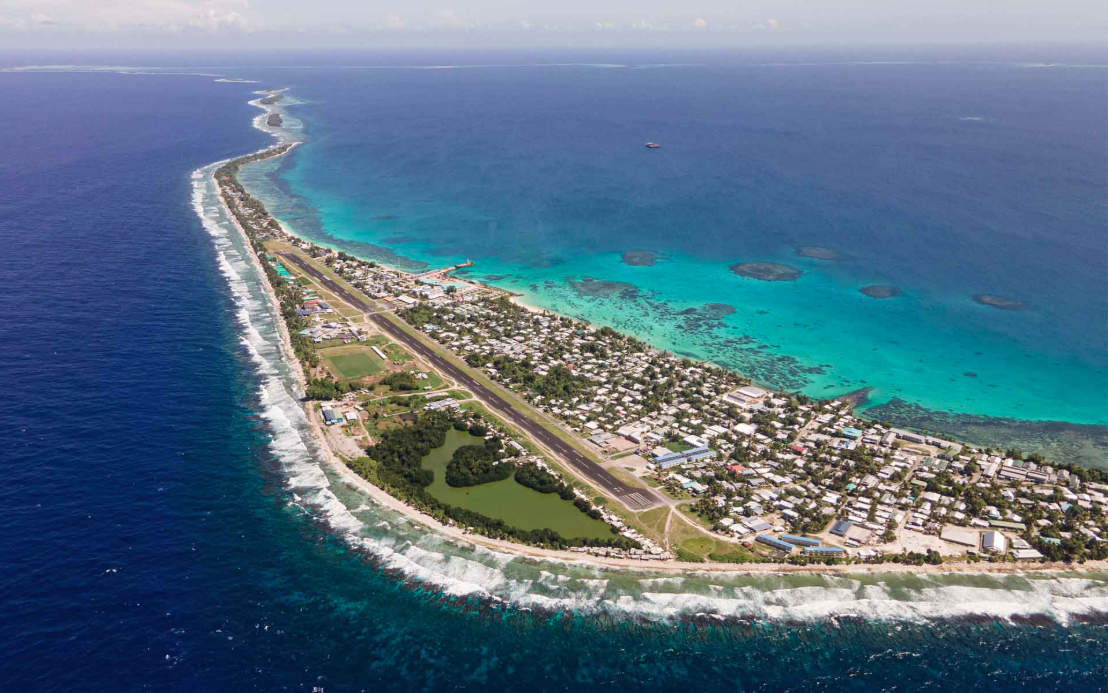
You don’t arrive in Tuvalu; you land on its spine. The entire nation is a scattering of coral dust barely scraping above the Central Pacific, and its capital, Funafuti, is dominated by a World War II runway that doubles as a soccer field, highway, and napping spot. There are no hills here. No wheat fields. Just an endless horizon of blue and a soil so salty it kills almost everything but the coconut palm and the swamp taro.
This geological hostility created a baking culture born of desperation and ingenuity. When you can’t grow grain, you harvest sap. When you can’t buy yeast, you ferment the jungle. The bread here isn't a delicate side dish; it is a dense, calorically violent survival mechanism designed to withstand salt spray and equatorial heat. Forget sourdough starters kept in ceramic jars. In Tuvalu, the starter drips from a cut flower high in the canopy.
The Trinity of the Atoll
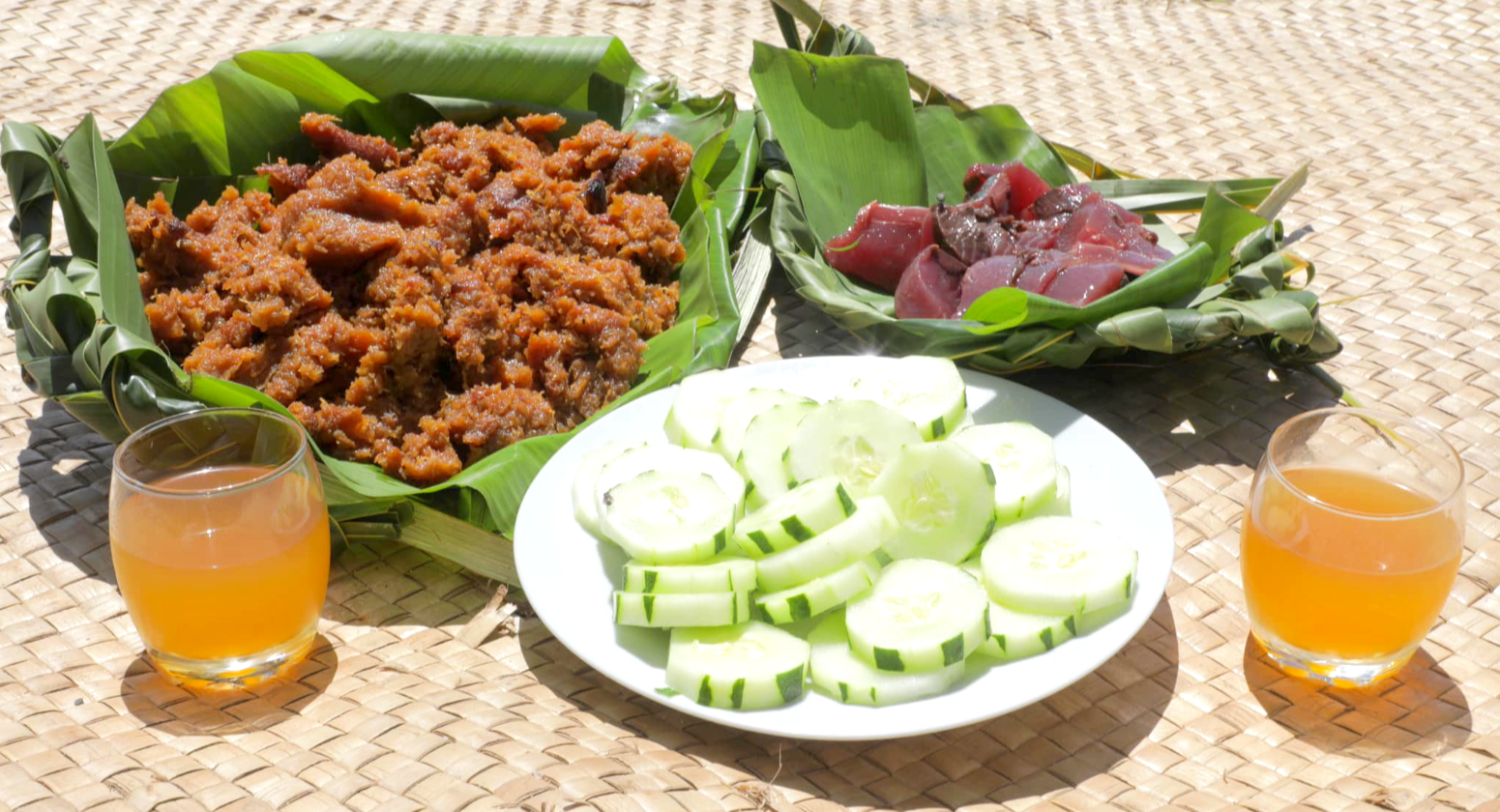
A complete Tuvaluan meal on a woven mat. The dark pile on the left is Fekei Pulaka, a dense pudding of grated swamp taro and caramelized coconut sap. It is sweet and heavy, designed to be eaten by hand alongside raw tuna (right) to cut the richness, washed down with a glass of sweet kaleve (coconut toddy) drink.
Tuvalu.TV. (2023, March 30). Documenting the culinary traditions of Nukulaelae and Funafuti as a heritage experience for the community. Facebook. https://www.facebook.com/tuvalu.tv
The Star: Tuvaluan Coconut Toddy Bread
This isn't the fluffy, cake-like "coconut bread" you find in Hawaiian gift shops. Authentic Tuvaluan bread is a work of fermentation biology, relying on kaleve—fresh coconut sap—to provide both the sugar and the wild yeast necessary for the rise.
Sap Replaces Commercial Yeast Entirely
The engine of this bread is kaleve, the sap collected by cutting the unopened flower spathe of a coconut tree. In its fresh state, kaleve is a sweet, translucent juice. Left to sit for even a few hours in the tropical heat, it begins to ferment into kaleve gagie (sour toddy). This liquid is teeming with wild yeasts and bacteria—specifically Saccharomyces cerevisiae and Lachancea fermentati—which act as a hyper-active, natural leavening agent. The baker doesn't proof yeast in warm water; they pour fermenting jungle juice directly into the flour.
Baked in Leaves, Not Loaf Pans
While modern kitchens in Funafuti use metal trays, the traditional method demands the umu (earth oven) or an open fire. The dough is not shaped into a pristine boule. It is heavily oiled with coconut cream, formed into rough logs, and wrapped tightly in banana or coconut fronds. This leaf-wrapping technique does more than hold the shape; it steams the exterior while the interior bakes, creating a "skin" that is tough, rubbery, and smoky, protecting the dense crumb inside from drying out.
Texture That Demands Chewing
Because kaleve fermentation is aggressive but short-lived, the gluten structure is often tight and heavy. The resulting crumb is dense, moist, and chemically complex. It tastes less like a western sandwich loaf and more like a yeasted dumpling that learned how to be a cake. The flavor profile is a collision of lactic acid tang (from the fermenting sap) and the high-fat richness of coconut cream, ending with a caramelized sweetness that sticks to the roof of your mouth.
Eaten to Survive the Morning Heat
This is not dinner bread. It is consumed primarily at breakfast or "tea time," fueling the day’s labor before the sun becomes unbearable. A slice of coconut toddy bread is a dense brick of energy. It is designed to be substantial enough that a single piece, paired with sweet tea, can sustain a fisherman or taro farmer for hours.
The Hands Behind the Feast
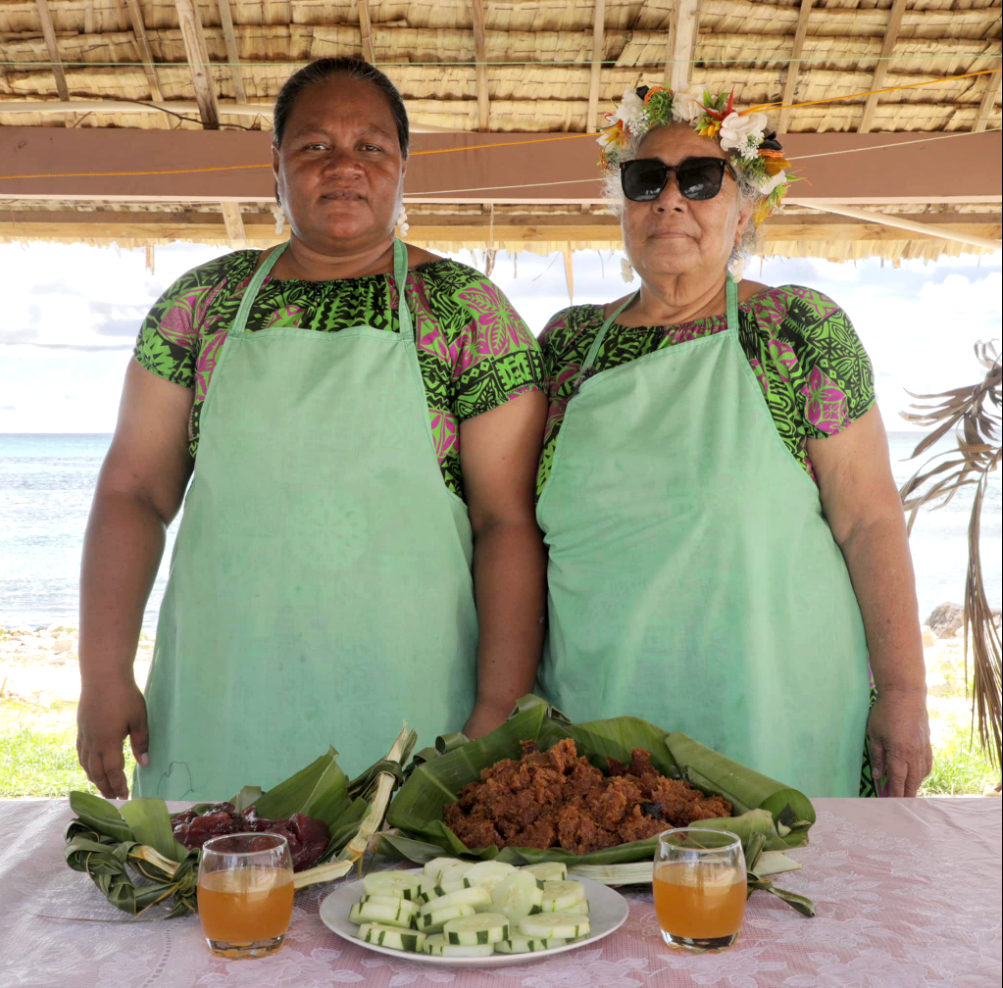
Adorned in floral garlands, these women from Nukulaelae and Funafuti stand behind the completed meal. Their culinary expertise transforms the raw ingredients of the island—swamp taro and coconut sap—into the rich, caramelized Fekei Pulaka displayed on the table.
Tuvalu.TV. (2023, March 30). The "beautiful ladies of Nukulaelae and Funafuti" pictured during the morning's cooking preparations. Facebook. https://www.facebook.com/tuvalu.tv
Secondary Starches: The Ancient and the Adapted
Before the arrival of wheat flour, "bread" in Tuvalu meant processed root vegetables. These older forms of starch still coexist with the modern flour loaves, serving as a reminder of the island's pre-colonial diet.
Fekei is the Original Islander Loaf
Before flour arrived on supply ships, there was Pulaka (giant swamp taro). Fekei is the result of grating this massive, coarse root bulb, mixing it with coconut cream (lolo), and wrapping it in leaves to be steamed or baked. It is technically a pudding, but it functions anthropologically as bread—the primary carbohydrate staple. It is dark, gelatinous, and holds a deep, earthy flavor that separates the tourists from the locals.
Solomei Turns Fruit into Dough
When the breadfruit trees fruit, the surplus is turned into Solomei. The cooked breadfruit is mashed into a paste, mixed with flour and the ubiquitous toddy syrup, then wrapped in banana leaves. It is a preservation technique as much as a recipe. The breadfruit adds a starchiness that makes the crumb softer than the pure flour versions, while the toddy syrup turns the crust a deep, mahogany brown.
Master Class: Tuvaluan Coconut Toddy Loaf
You likely cannot harvest fresh coconut sap in your backyard. We will simulate the biological action of kaleve using a fermentation hack that mimics the sour-sweet profile of the original.
The Strategy: We create a "mock toddy" by fermenting coconut water with sugar and yeast overnight. This pre-ferment provides the distinct tangy flavor profile that standard water-based doughs lack.
Yield: 2 heavy loaves Time: 18 hours (including pre-ferment)
Step 1: Brew the Mock Toddy (The Night Before)
300g Coconut water (pure, no preservatives)
50g Raw sugar
2g Instant yeast
Mix these in a jar. Cover loosely with a cloth. Let it sit at room temperature for 12–16 hours. It should smell yeasty, slightly sour, and be bubbling actively. This is your kaleve.
Step 2: Construct the Batter
500g All-purpose flour
15g Baking powder (Tuvaluan breads often double-leaven for lift)
5g Salt
100g White sugar
200g Shredded coconut (unsweetened, fresh if possible)
350g Mock Toddy (from Step 1—use it all)
150g Coconut cream (full fat)
Whisk flour, baking powder, salt, sugar, and shredded coconut in a large bowl. Pour in the Mock Toddy and coconut cream. Mix by hand until a shaggy, sticky dough forms. It will feel wetter than standard bread dough—almost like a thick mortar.
Step 3: The Leaf Wrap (Or Foil Hack) Traditionally, you would wrap this in leaves. If you lack access to a banana tree, grease two loaf pans heavily with coconut oil. Divide the dough between them. Crucial Detail: Cover the pans tightly with foil. This replicates the steaming effect of the leaf wrapper.
Step 4: The Steam-Bake Preheat oven to 175°C (350°F). Bake covered for 50 minutes. Remove the foil. The top should be pale and steamed. Brush generously with extra coconut cream and bake uncovered for another 15–20 minutes until golden brown.
Context: The Dunking Ritual
You do not eat this bread dry. In Tuvalu, texture is a contact sport. The bread is dense by design because it is engineered to be a sponge. It is almost mandatorily served with a mug of hot tea or coffee, sweetened until the spoon stands up straight. You tear off a chunk of the loaf, submerge it in the hot liquid, and eat it wet. The hot tea dissolves the coconut fat in the crumb, turning the dense bite into a warm, melting bolus of sugar and caffeine. To eat it dry is to insult the baker and risk choking.
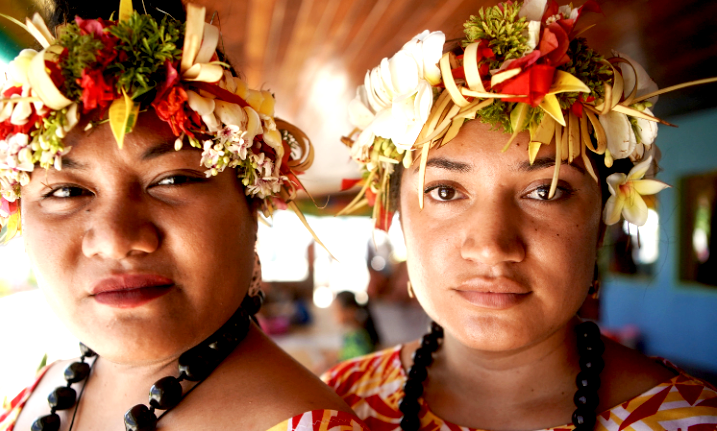
Faces of the 11,000
Beyond the statistics of rising tides are the people who call these atolls home. Two young Tuvaluan women wearing traditional floral garlands (fau), representing the vibrant, living culture described below. Citation: Creator: Mario Tama | Credit: Getty Images Copyright: 2019 Getty Images
Population Insight: The 11,000 on the Front Line
Fresh coconut sap tapped daily. Sweet, milky, and energetic. Drink it fresh at dawn or fermented at dusk.
Salted, dried fish preserved in the sun. Rehydrated and boiled in coconut cream to pair with heavy starches.
Swamp taro grown in compost pits dug into the coral. Coarser and earthier than standard taro.
Massive land crabs that crack coconuts. The meat is sweet and naturally oily, often roasted simply over fire.
Tuvalu is one of the smallest nations on Earth, with a population hovering around 11,000 people. They are effectively living on a sandbar that the ocean is trying to reclaim. This scarcity defines their food culture. There is no room for waste. Every coconut is used for water, flesh, husk, and shell. The population is heavily concentrated on the main atoll of Funafuti, creating a tight-knit, urbanized village dynamic where recipes like Fekei and Fausi are shared currencies, passed down not just as food, but as proof of identity in a nation fighting to stay above the waves.
Share This Story