Western Sahara’s Sand Bread
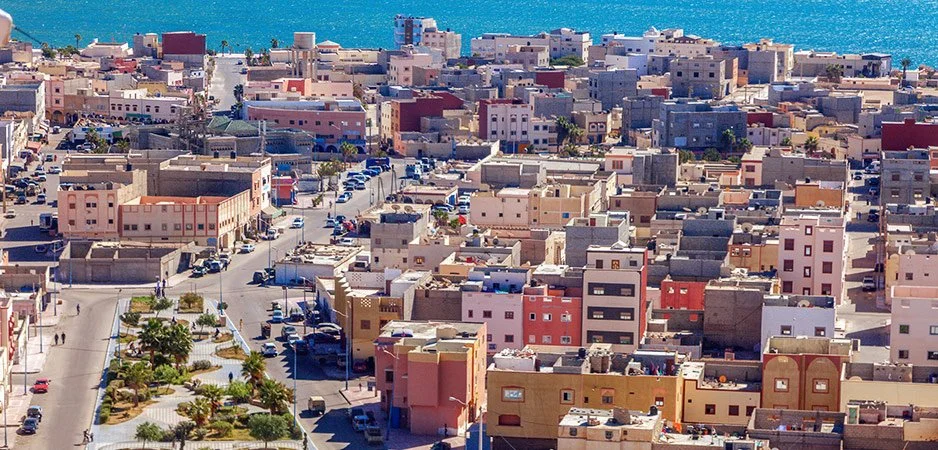
Coastal Living
The colorful urban centers of Western Sahara, where the desert meets the Atlantic, serve as the backdrop for a unique culinary culture.
To speak of bread in the Western Sahara is to speak of the earth itself. The Sahrawi people, in the vast, windswept expanses of the Sahara Desert, have perfected a baking method that utilizes the desert floor as its primary tool. This food is not merely sustenance; it is a ritual of survival, ingenuity, and ancient hospitality.
While the region is often defined by its political complexity, its culinary soul is simple, communal, and deeply rooted in the nomadic lifestyle. The bread here does not rise in stainless steel machines; it rises under the heat of embers and sand. For the traveler or the curious epicurean, tasting this bread is the closest one can come to tasting the desert itself.
The Icon: Mella (The Bread of the Sand)
The most famous bread of Western Sahara is Mella (sometimes referred to as Lmella or shared with the Tuareg Taguella tradition). It is a testament to the resourcefulness of the Sahrawi nomads. In a landscape devoid of infrastructure, the Sahrawis turned the sand dunes into an oven.
The process is mesmerizing to watch. A fire is built on clean sand until it burns down to hot coals. The coals are swept aside, and the dough—a simple, dense mixture of flour, water, and salt—is placed directly onto the superheated sand. It is then covered with more hot sand and embers. The bread bakes inside this subterranean kiln, absorbing the dry, intense heat of the desert.
When it is finished, the baker taps the loaf to dislodge the sand. The result is a heavy, disk-shaped bread with a thick, charred crust and a dense, steaming interior. It is often broken by hand and shared communally, never cut with a knife. The flavor is distinct—smoky, earthy, and nutty, often dipped in camel fat or olive oil.
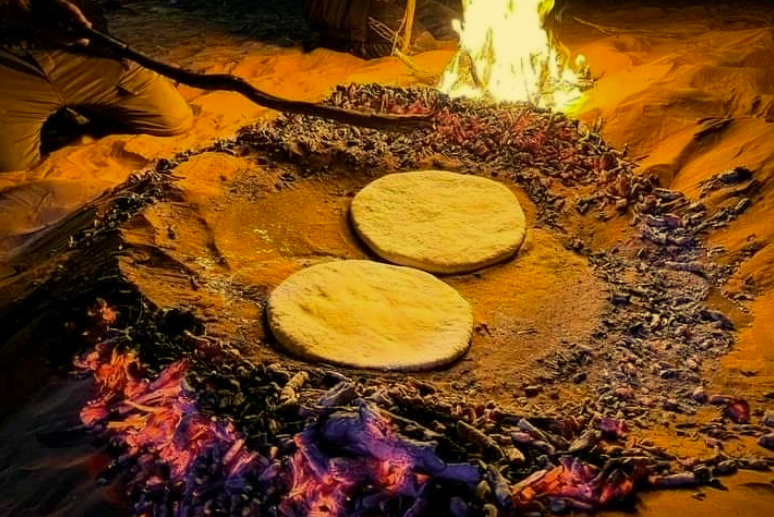
Baking Mella
The dough is laid on the hot sand before being covered with embers, creating a natural pressure-cooker effect.
Secondary Favorites: The Oven and the Griddle
While Mella is the star of the desert, settled life in cities like Laayoune and Dakhla has introduced other staples to the Sahrawi table.
1. Khobz (The Daily Round)
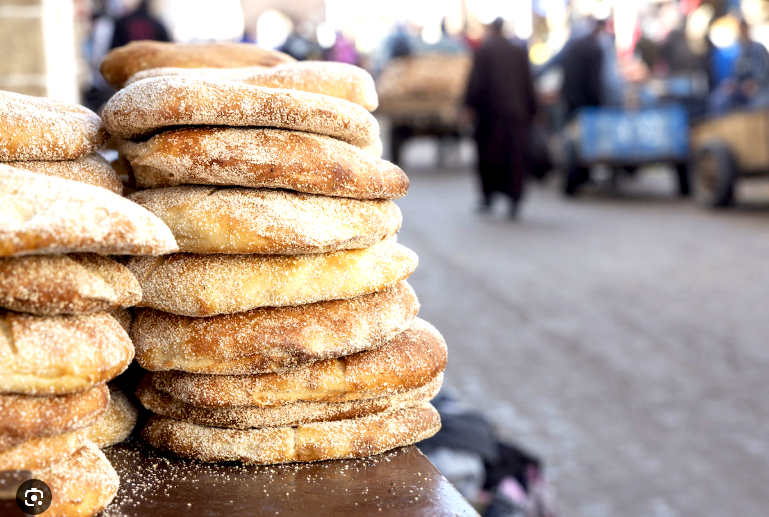
The Daily Staple
In bustling markets and quiet neighborhoods alike, fresh stacks of Khobz are a daily sight, ready to be taken home for the midday meal.
As in much of the Maghreb, Khobz is the standard daily bread. Unlike the Mella, this is leavened with yeast and baked in communal neighborhood ovens or home gas ovens. It is round, relatively flat, and features a pocket-like interior similar to pita but with a sturdier crumb. It serves as the edible utensil for scooping up tajines and stews, an essential tool in a culture where eating with the right hand is customary.
2. Msemmen (The Layered Flatbread)
Influenced by their northern Moroccan neighbors, Sahrawis also enjoy Msemmen (or Meloui). This is a rich, laminated flatbread made by folding dough with oil and semolina multiple times to create flaky layers. It is pan-fried on a griddle until golden and crisp. While Mella is the bread of dinner and survival, Msemmen is often the bread of breakfast and tea time, served with honey or goat cheese.
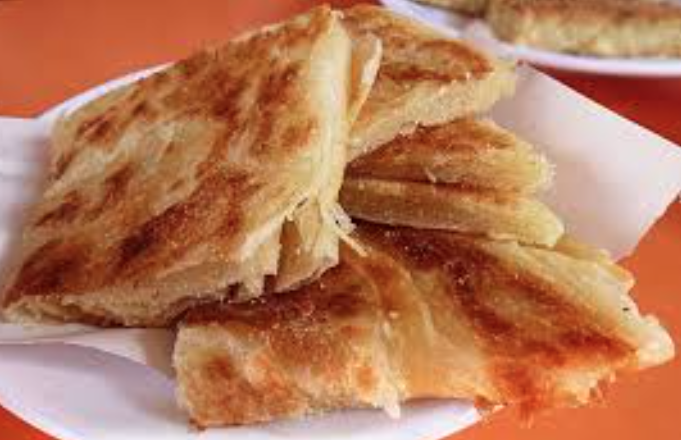
The Thousand-Layer Bread
Known for its lamination, Msemmen is repeatedly folded with oil and semolina to create flaky, buttery layers that pull apart beautifully.
Master Class: Baking Sahrawi-Style Semolina Flatbread
While most of us do not have a pristine sand dune in our backyard to bake a traditional Mella, we can recreate the texture and flavor of this dense desert bread using a cast-iron skillet. This recipe mimics the dry, intense heat of the sand to produce a rustic, unleavened loaf that pairs perfectly with stews.
Yields: 2 large round loaves Prep time: 15 minutes Cook time: 20 minutes
The Ingredients
2 cups Fine Semolina Flour: Semolina provides the authentic golden color and nutty flavor crucial to Sahrawi bread.
1 cup All-Purpose Flour: Softens the dough slightly.
1 tsp Fine Sea Salt: Essential for flavor.
1 ¼ cups Warm Water: Adjust as needed; the desert air is dry, but your kitchen might be humid.
2 tbsp Olive Oil: Plus extra for coating.
Step-by-Step Instructions
1. The Mix In a large mixing bowl, combine the semolina, all-purpose flour, and salt. Create a well in the center and pour in the warm water and olive oil.
2. The Knead (Crucial Step) Mix with your hands until a shaggy dough forms. Turn it out onto a clean surface. You must knead this dough vigorously for at least 10 to 15 minutes. Unlike yeast breads that need gentle handling, this unleavened dough relies on physical kneading to develop the gluten structure. The dough should transform from grainy to smooth and elastic. Tip: If the dough feels too stiff, wet your hands with water and continue kneading.
3. The Rest Divide the dough into two equal balls. Coat them lightly with olive oil to prevent drying. Cover with a clean kitchen towel and let them rest for 20 minutes. This allows the gluten to relax so you can shape it without it springing back.
4. The Shape Take one ball of dough and flatten it with the palm of your hand into a disk. It should be about ½ inch (1.5 cm) thick. Do not make it too thin; this bread is meant to be substantial and sturdy. Prick the surface all over with a fork; this prevents it from puffing up like a balloon and ensures even cooking.
5. The "Sand" Bake (Skillet Method) Heat a heavy cast-iron skillet over medium-low heat. You want a dry, consistent heat—do not add oil to the pan. Place the dough disk into the hot, dry skillet.
Cook for about 7–10 minutes on the first side. You are looking for deep golden-brown spots and a dry, crisp crust.
Flip the bread. Cook for another 7–10 minutes on the other side.
Chef's Tip: Press down on the bread occasionally with a clean towel to ensure the center cooks through.
6. The Serving Remove from the heat and wrap immediately in a cloth to keep it warm. Serve by breaking it into chunks by hand—never slice it.
Why People Enjoy It: The Taste of Resilience
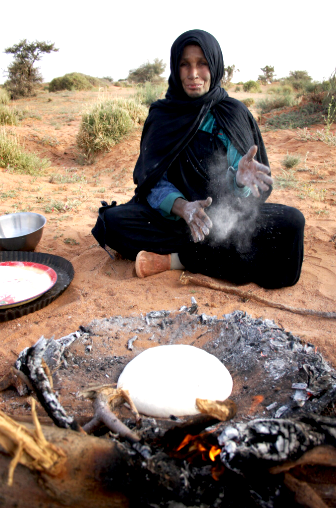
The Flavor of the Earth: Why Mella is Beloved
To the Sahrawi people, Mella is far more than a source of calories; it is a tangible symbol of their identity and resilience in one of the world’s harshest environments. In a landscape where resources are scarce, the ability to bake a fresh, steaming loaf using nothing but flour, water, and the desert floor is a source of immense pride. It represents the triumph of ingenuity over adversity—a "hearth" that can be created anywhere the wind blows.
The appeal of Sahrawi bread lies in its honesty. In a harsh climate, food is not decorative; it is fuel. Mella is enjoyed because it is dense and calorie-rich, capable of sustaining a nomad for long treks across the hamada (rocky desert).
But beyond utility, there is a deep emotional connection. The bread represents the "hearth" in a culture that is often on the move. Sharing a loaf of Mella is a sign of peace and safety. It acts as a neutral canvas for the intense flavors of Sahrawi cuisine—the gaminess of camel meat, the richness of goat butter (dahn), and the sweetness of sugary tea.
When you eat this bread, you are expected to use it as a scoop. The texture is designed to soak up the rich sauces of a Mreifisa stew without falling apart. It is a tactile dining experience that connects the eater to the food and the host.
A Note on the People of Western Sahara
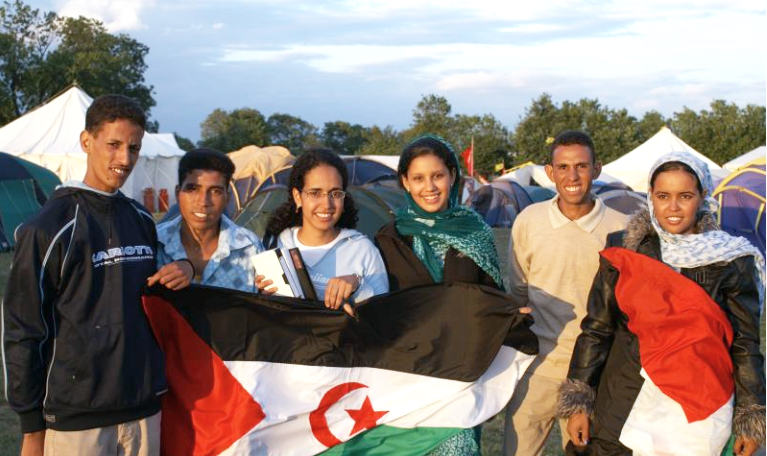
Guardians of the Desert
The people of Western Sahara, known as the Sahrawis ("inhabitants of the desert"), are a distinct blend of Berber, Arab, and African roots. Historically nomadic camel herders who navigated the vast dunes by the stars, they are famous for their poetic oral traditions and immense hospitality.
The Sahrawis are a people of immense resilience and dignity. Historically nomadic, their culture is a unique tapestry woven from Berber (Amazigh), Arab (Hassaniya-speaking), and African roots, with a layer of Spanish influence from the colonial era.
Despite the protracted political conflict that has left many Sahrawis living in refugee camps near Tindouf, Algeria, their culture remains vibrant. Hospitality is paramount. A guest in a Sahrawi tent is treated with the utmost honor, often greeted with the ritualistic tea ceremony that can last for hours. They are a poetic people, with a rich oral tradition of storytelling and verse that travels across the dunes just as their ancestors did.
To understand their food is to understand their patience. Just as the tea is poured back and forth dozens of times to create the perfect foam, the bread is kneaded and baked with a slowness that defies the modern world.
The Ritual: Sahrawi Tea (Attay)
No bread in Western Sahara is eaten without tea. This is not just a drink; it is a ceremony. Sahrawi tea is green gunpowder tea, boiled with generous amounts of sugar and fresh mint. It is poured from a height to create a thick foam (the "turban").
Why it pairs well:The intense sweetness of the tea balances the savory, salty density of the Mella bread. It is traditionally served in three rounds: the first is bitter like life, the second sweet like love, and the third soft like death.
The Stew: Camel Mreifisa
Mreifisa is a traditional stew made with rabbit, lamb, or most famously, camel meat. It is slow-cooked with onions, garlic, and minimal spices to let the meat's flavor shine. The stew is poured directly over broken pieces of unleavened bread.
Why it pairs well:The dense semolina bread acts as a sponge, absorbing the rich, fatty broth of the camel meat without becoming mushy. It turns the bread into a utensil and a main course simultaneously.
The Drink: Zrig (Camel Milk)
In the heat of the desert, hydration is key. Zrig is a popular drink made by mixing fermented goat or camel milk with water and sugar. It is whisked until frothy and served cold.
Why it pairs well:The tart, fermented tang of the yogurt cuts through the heaviness of the bread and grains. It provides a cooling contrast to the hot, ember-baked dough, aiding digestion in the harsh climate.
The Finish: Goat Cheese & Dates
For a lighter meal or breakfast, bread is paired with soft, fresh goat cheese and dried dates from the oasis. The dates are often mashed into a paste or eaten whole alongside the cheese.
Why it pairs well:The earthy, slightly smoky flavor of Mella bread provides a grounding base for the intense sugar of the dates and the creamy, acidic bite of the fresh cheese. It is a perfect balance of textures.
Western Sahara Demographics
Latest Estimates (2024-2025)Share This Story